

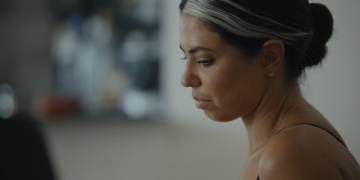
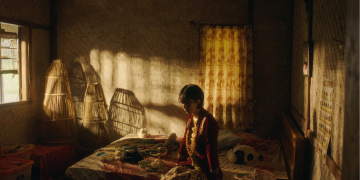
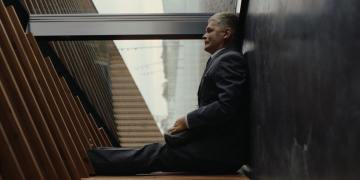

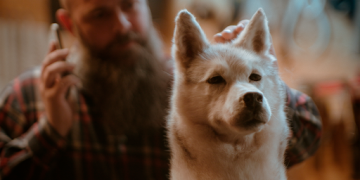

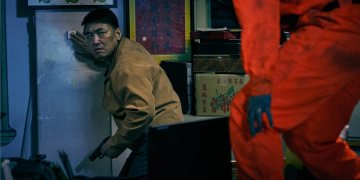


I watched Alif Wants a Girl, Yuli Wants a Ride (2023) in Sewon Screening #10, ISI Yogyakarta’s very own film festival, during the “Awas, Ada Manusia!” program. The program consists of officially selected films with themes centering around what it seems to be a Sartrean take on human relations: hell is other people. The concert hall was packed. I came in blind and unexpecting of anything. People were laughing throughout the film and cheering warmly by the end. I cheered along too. I thought the film was extremely flawed—although there are interesting things to point out: the flaws this film has and how contemporary society feels as of now.
We can safely say that the humor on Alif Wants a Girl, Yuli Wants a Ride will age like milk. Not only is this short film set in present day Jakarta, it also uses a particular early-2020s TikTok trend and derogatory labels of people that are born out of the Internet—the weeaboo and the “ngabers”—as a crucial part of its narrative. The word “ngabers” is a label given to motorcycle modding enthusiasts and the subculture is often associated with masculinity, noisy exhaust pipes, the Yamaha Aerox, and the like. I totally get the annoyance people have towards “ngabers”, but I do recognise that the tendentious resentment also comes from class bias—which is unfortunate too.
The characters of this short film are so undeniably clichéd and its plot so candidly uncomplicated. Alif, the weeaboo, falls in love with Yuli. But Yuli, being the material girl that she is, only likes “ngabers” because she would want to ride their cool bikes too. The entire film is Alif wanting to impress and do nice things to win Yuli’s heart. The kind of romance trope that is displayed in Chaplin’s The Gold Rush or that one sad Tom and Jerry episode where Tom sacrifices everything for a girl. The oversimplification of these characters creates a dichotomy between the hard-working guy and the superficial girl. Enforcing harmful gender stereotypes and rigid gender roles. That’s definitely sexist, right?
But even with its oversimplification of stereotypes and the flaws that come with it, I can’t help but feel charmed by its bonafide naivety.

This short film interplays with the preconceived notions the audiences have towards the labels pasted onto the characters. To most of us watching, the stereotypes presented through those labels of weeaboo and “ngabers” are deemed cringeworthy. Those types of people are shunned with a bad light through the collective annoyance we have on them throughout our lives.
Through the film’s use of these stereotypes on its characters—as if an exaggerated caricature—we laugh at them in a post-ironic sense, a laughter which is both genuine and detached; in a state where earnestness and irony become intertwined.
I read of Vermeulen and Van den Akker some time ago. They wrote an article called Notes on metamodernism (2010). They argued that metamodernism is the response to postmodernist discourse. Metamodernism is an interplay between modern naivety and postmodern cynicism.They believed that we have used irony (something inherently postmodern) to the point of its exhaustion. This shift of feeling, they claimed, comes from worldly events such as the rise of the Information Age, climate crises, and others. This presents a change in the arts, which is evident in the works of prominent artists of the 21st century, such as Sufjan Stevens in music and Charlie Kaufman in film.
These works come with an oscillation from two polar opposites: sincere and ironic, naive and knowing, optimistic and skeptical, et cetera. In the case of Sufjan Stevens and his album, Illinois (2005)—he oscillates between the grandiosity of baroque instrumentations and lyrics of mundanity, the epic and the intimate. Similarly, Kaufman knowingly dabbles in postmodern existentialism with humor in his film scripts, such as Being John Malkovich (1999) and Synecdoche New York (2008)—both of which oscillate between profound truthiness and absurdness. As the postmodern framework dies out, metamodernism, as a new structure of feeling, presents itself for us to make sense of our new complexities. Metamodernism, in a way, helps us navigate the world—with both modern and postmodern perspectives—towards a deeper understanding of our very own cultural logics.
Alif Wants a Girl, Yuli Wants a Ride definitely manifests metamodern sentiments too. The film’s post-ironic take on stereotypes isn’t simply a generalization (I’m not arguing that it isn’t), but the film also recognizes that the people associated with these stereotypes can have their happy endings too despite the ridicule they endured. The postmodernists have taken the happy ending away from us, being the skeptics that they are. The overt skepticism the postmodernist ideas present makes us think that happy endings are sappy, corny, and even cringy.
Alif Wants a Girl, Yuli Wants a Ride—through metamodernism—embraces the societal dislike towards weeaboos, acknowledges their struggles, and still lifts them up through the narrative of self-acceptance. Experiencing Alif Wants a Girl, Yuli Wants a Ride in a packed concert hall where people feel the same sentiments I feel—I pretty much think they’re spot on with this new “modern”.
One thing I took away from the film is that we should embrace the cringe in ourselves too. The exposure we have of wars, the seemingly impossible fight on climate change, and the impacts of late stage capitalism. Everything seems to be crumbling down. No, everything is crumbling down. With everything falling between our feet, we should be skeptical towards the powers that did this to us. Our very own symptomatic decline of hope is evident in our incapability of imagining a bright future. It feels like the world is turning dystopian day by day.
But amidst this chaos and death of meaning, we should celebrate sincerity and be hopeful too. As I grew up, I grew tired of my own skepticism. Although it’s a useful tool to navigate this uncertain world we’re in right now, being skeptical isn’t fun. It drains the humanity out of us.
Being aware of the flaws Alif Wants a Girl, Yuli Wants a Ride have, I still felt warm by the end of the film. Alif grew to accept his identity and found his true love. I know the hardships that come with relationships—but like Alif, I want to find love in a big city too. I want to learn to embrace my cringiness: to risk the rolled eyes, the shoulder shrug, or even being laughed at. I want to acknowledge my true self and celebrate it all.









Discussion about this post