




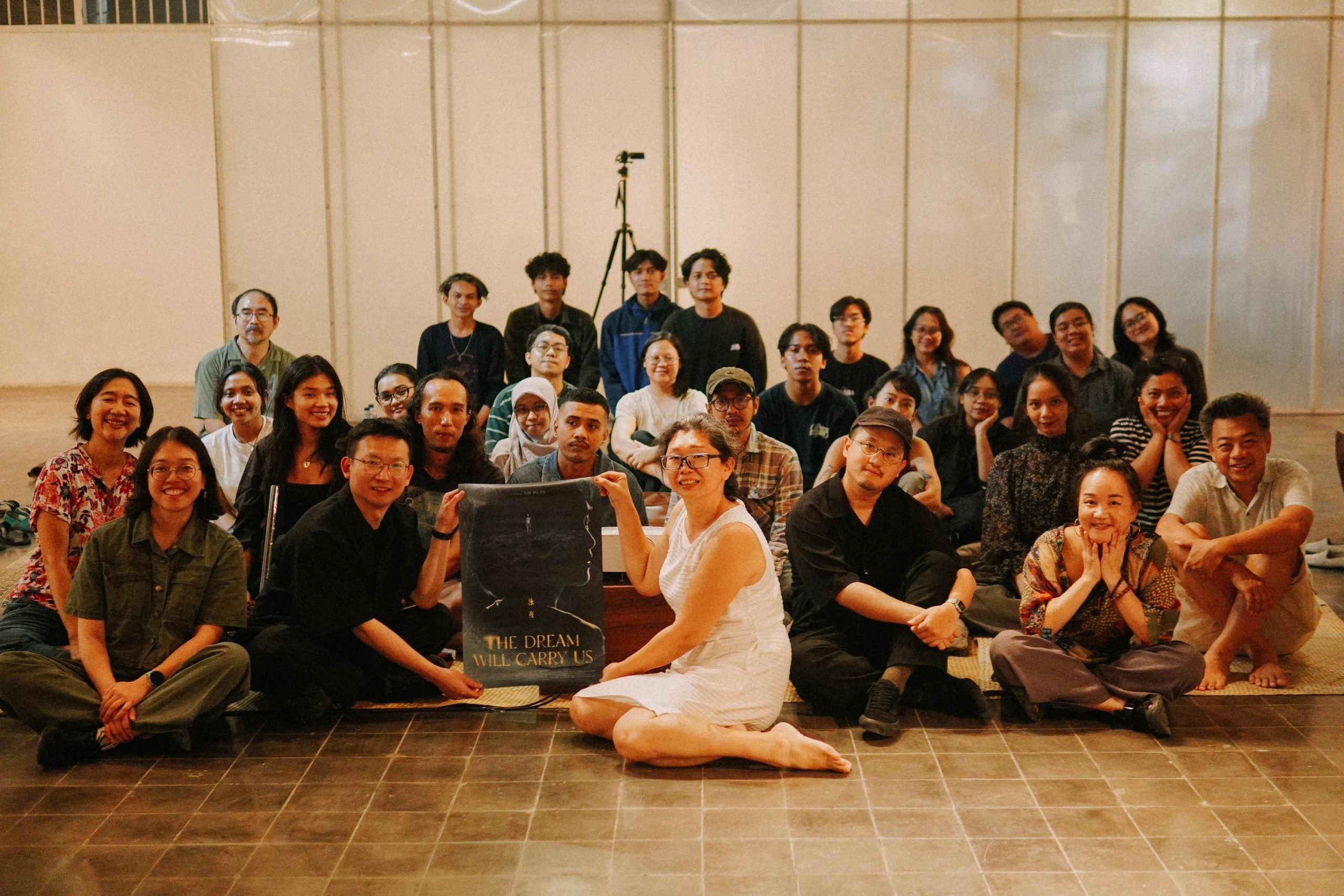
April’s Minikino Monthly Screening & Discussion (MMSD) offers a look into the city of Kaohsiung, a major coastal port in the south of Taiwan. The four short films which make up the Kaohsiung Shorts program were produced under a production grant by the Kaohsiung Film Archive (KFA). Participating filmmakers were encouraged to reside in and use the city as a creative springboard, yet are otherwise given free reign over themes and story. While the four titles themselves could not be more different in terms of subject matter, genre, and aesthetics—all of them share the common thread of the unseen urban identity that makes the southern Taiwanese city on the coast itself.
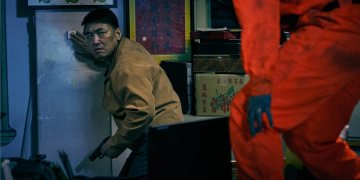
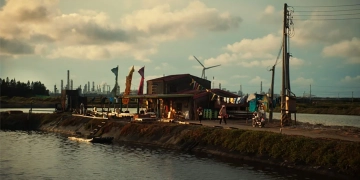
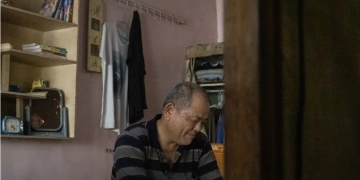
We are first brought to the realm between the reality and dream world with a mother and her late daughter in The Dream Will Carry Us (泳夜, Taiwan, 2023) by Lin Po-yu. Lurking at the corner of the cityscape lives a family in a drug party warehouse in Little Deaths (一點一滴的死, Taiwan, 2023) by Liu Chun-yu. Then, in another post-apocalyptic reality, a couple had to survive through the post-apocalyptic Longest Night (長夜, Taiwan, 2023) by Liang Hong-kai. In the end, we were brought back to another vast natural landscape in J is Just For Afternoon Thunderstorm (山雨欲來, Taiwan, 2023) by Chuang Yun-Hslang. Each place contains different stories hidden beyond the city’s surface.
On the Beach at Night
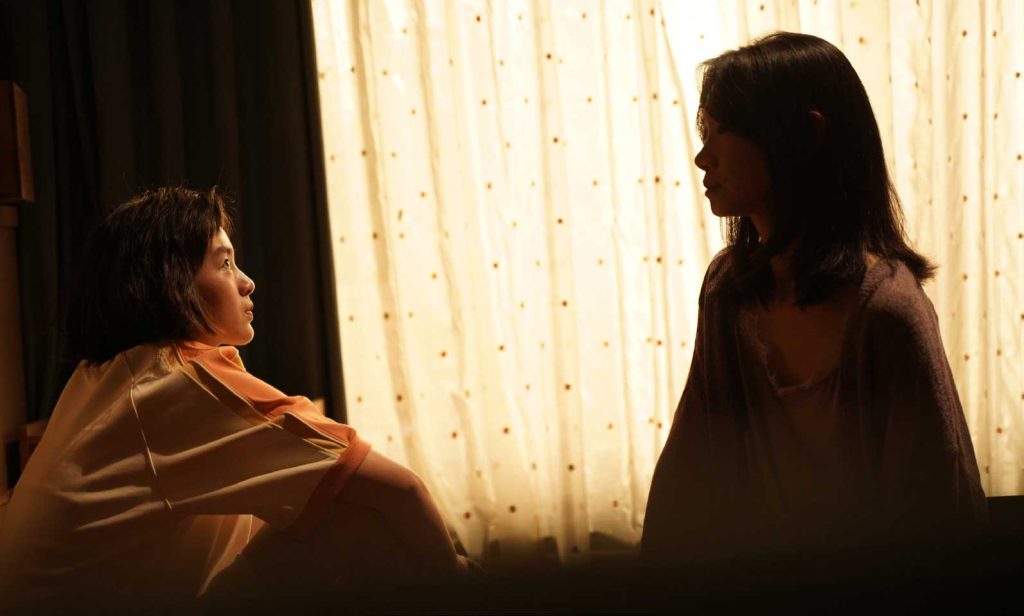
The story development of Lin Po-Yu’s The Dream Will Carry Us (2023) ignited by a dream of his father, fifteen years after his passing. Wanting to capture the warmth of entering the ocean in reverie, he then wrote and directed this short film about a grieving mother and her long lost daughter. The two made their way through the city at night, through the empty nighttime streets and eventually landed atop a hill, raquettes in hand.
Badminton is a popular family sport in Taiwan, and its inclusion here signifies the short’s thematic statement—it’s a game that requires two; instantly collapsing with only one player. In much the same way, cities are only meaningful insofar as there are people with whom you’d like to share it. When the daughter left the mother alone mid-serve, she too abandoned this space—the well-defined urban landscapes collapsed and in its place there was only absolute darkness and the sound of crashing waves.
What follows is the short’s most difficult sequence. During our conversation online in his visit to Bali, Indonesia for MMSD, Po-Yu told us that he wanted to take on the challenge of filming primarily at night as a follow up to his previous short film, To the Sea (看海; Lin Po-Yu, Taiwan, 2021), which showcased Kaohsiung under the sunshine. To do this, he had to deal with chilling ocean temperatures and dim natural moonlight, not to mention blocking off an entire street.
But the film’s most powerful sequence lies in the absence of these views—when we as the audience are lost without sight, just like the mother in search of her daughter, unable to carry herself into the future. Strengthened by an incredibly patient camera which refuses to rush through moments, this short film invites us to really look and sit with those dreams of what we’ve lost.
Looking for Sanctuary in an Indifferent World
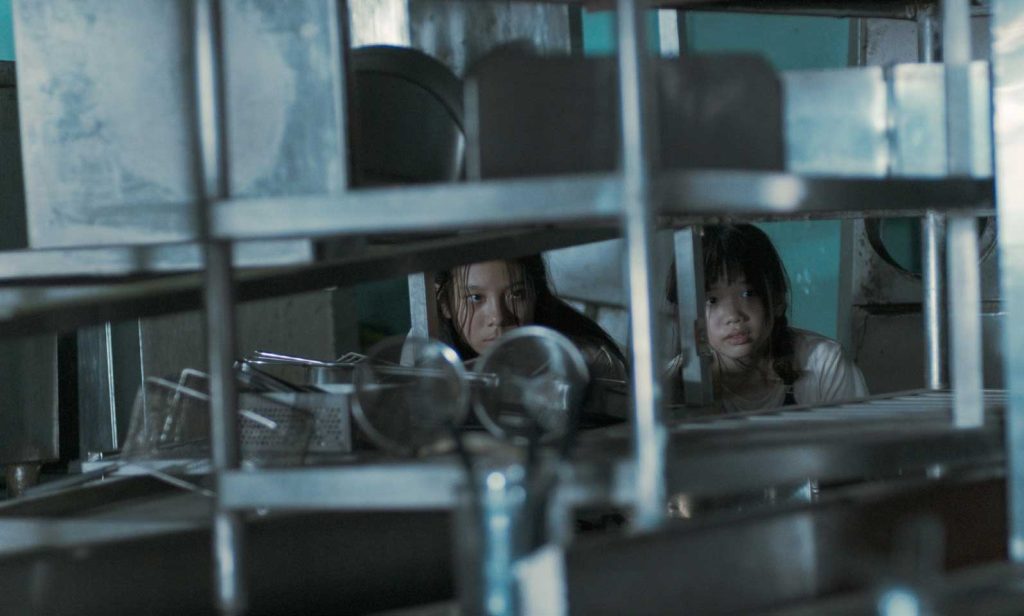
In Little Deaths (2023), a totally different life emerges in a corner of Kaohsiung where the marginalized collective: a mother and her two daughters, Chieh and Chun. They live in a cramped warehouse where drug parties and rats are ever-present. The reality they live in is divided into the human and animal worlds. It’s only when the animals don’t collide with their world that Chieh and Chun can live normally as kids. But, it seems that rats often come into their lives even though they have been exterminated many times.
At first, we can sympathize with Chun’s horrid feelings when her mother and sister indifferently burn the rats in the warehouse until we see through Chun’s eyes to understand the horrible things that happen to her family. Just like Chun, we see things through her innocent view that is constantly being debunked by glimpses of the animal world. The sound of rats being burned in a barrel at the film’s beginning reappears at the climax, blending with the sound of the mattress squeaking when Chun tries to escape from the animal world.
The only person Chun can rely on is her older sister, Chieh. Together, they seek a world where they can live without the disturbance of irresponsible adults. That is until Chun had to deal with it herself to end her misery. Without her sister, Chun’s safest place is an old fridge, where she escapes from the reality of the world that is indifferent and corrupt. The deaths of the rats that were never shown at the beginning are a sign of the deaths of the next ‘rats’ whose deaths are also not shown. Are these rats actually dead? Or will killing these rats on an individual scale, as Chun did, change her situation?
A Political Thriller
The French philosopher Jean Baudrillard first coined the term “hyperreality” in his 1981 magnum opus Simulacra and Simulation. In it, he described a generation existing with “models of the real without origin or reality”, a state of cultural confusion in which the real and its substitutes blur together.
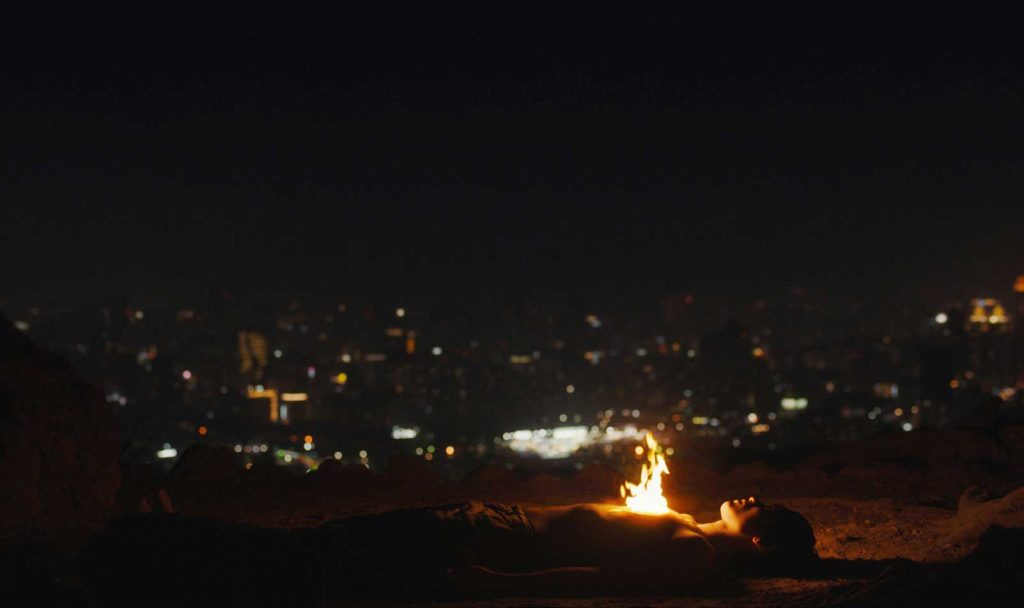
Liang Hong-Kai’s Longest Night (2023) situates this concept within the post-pandemic world. It follows a young man, living in the ruins of a city under perpetual night. Indifferent soldiers in gas masks prowl the dark alleyways in search of people to kill, all while our main character is engaged in his own quest for answers. Was it some sort of a natural cataclysm? A plague? All-out war? Nobody knows, and this inability to discriminate between real and unreal terrorizes our protagonist more than all the violence around him.
Steeped in grim symbolism and politically-charged visual metaphors, Longest Night (2023) presents the metropolis as an indifferent entity—one bordering on Lovecraftian incomprehensibility in its violence towards its inhabitants. Its dystopian vision full of body horrors serves a prescient warning; this is the world of man wrought under the animalistic violence of militarism. The ghosts of the past in a brand new hazmat suit. It might sound depressing, yet its main character’s tragic end also serves as a celebration of that innate desire for truth-seeking—the light that will always exist, regardless of how long the night is.
Survival of the Fittest through a Thunderstorm
Finally, our portrait of Kaohsiung broadens through J is for Just An Afternoon Thunderstorm (2023). The vast natural landscapes featured in the short often stands for the character’s vulnerability, as the visual of giant rocky cliffs standing tall over them bears witness over the unravelling of their feelings—of love, fear, and cowardice.
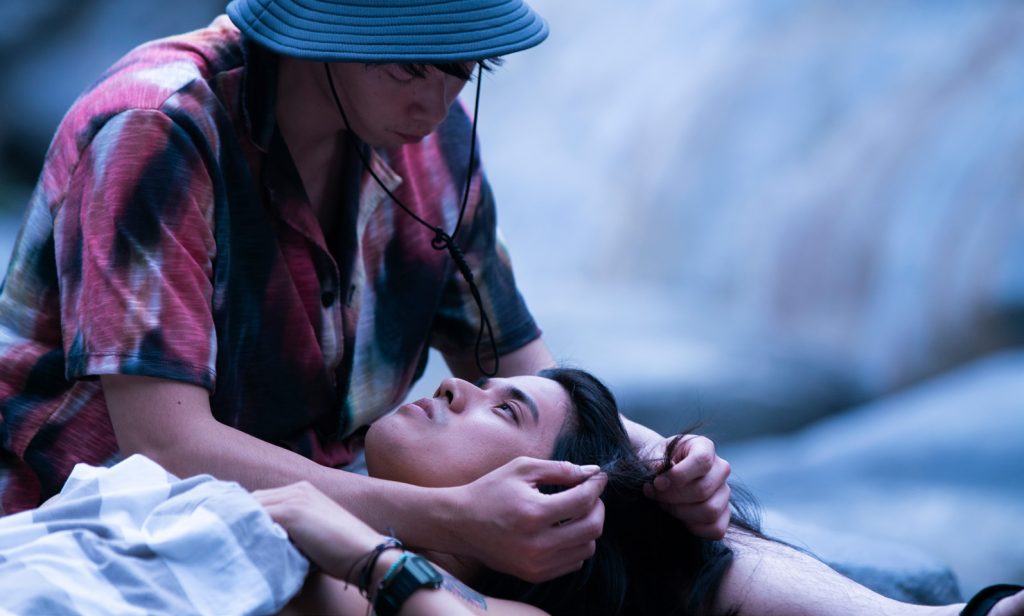
M and Jiang are a couple on vacation together. They are polar opposites: M is brave, carefree, and quite mischievous, whereas Jiang is timid, insecure, and more grounded. Their exploration comes with beautiful scenery one can’t find on the regular route. But there, their relationship starts to be shaken by the sudden appearance of a naked, foreign stranger who offers a more adventurous way to enjoy nature. The bare natural landscape and the stranger juxtaposed with M and Jiang, who look alienated from the rest of the place, which eventually will lead the couple to choose whether to adjust or stand like a sore thumb in an inevitably new environment.
The visuals in this film went progressively broader, along with the narrative of a detached couple. What was first shown in a cramped car and narrow bridge where they talked about their open relationship and dreams gradually evolved into an open space where their intimate conversation ended. Throughout the film, the two are almost inseparable. From the beginning, we can always see them within the frame. As the landscape broadens, it’s as if the place gave them more space to move to the point that we can see them as individuals for the first time after a while, eventually separating the couple from frame to frame.
At the beginning of the film, it seems like their separation has been warned, a sword of Damocles looming over the couple. The thunderstorm will inevitably happen to them. Apparently, the thunderstorm comes in the form of a choice M has to make for their relationship: to go over a seemingly challenging life, which is unpredictable but liberating, or to stay in a cracking relationship that was keeping him on a leash.
The Short Film as an Urban Chronicler
What makes a city? Ask ten people and you’ll get ten different, incomplete answers. Fortunately, some people might agree that this is a puzzle that can be solved by making and watching some short films. Every filmmaker will inevitably have something to say about the city wherein they worked their craft. This is doubly true in the case of short films, where the smaller scale often necessitates greater intimacy with its shooting locations. Each of the four short films in “Kaohsiung Shorts” reveal this hidden delight; a more intimate look beyond the surface of the city in which these four short films were made.
Editor: Edo Wulia
WRITER’S PROFILES
 |
AUDIE FERRELL
Surabaya, Indonesia Audie was born in Surabaya, raised in Jakarta and Denpasar, and feels home wherever there’s a movie screen. Aside from debating and studying English literature at Petra Christian University, he mostly spends his time writing about the intersection between film, history, economics, and environmental engineering. |
 |
RAHMANIA NERVA
Depok, Indonesia Rara is a writer based in Depok, West Java. Sometimes a copywriter, film essayist, or otherwise engaged in visual artworks. Constantly learning about art activism, decolonization practices, film, and literature, which she takes utmost interest in. |






Discussion about this post