



On the last day of Minikino Film Week 12 (MFW 12), I had the opportunity to sit down with Adam Hasyim Al Raschid, director of Air Pangea (Indonesia, 2026), one of the nominees in the festival’s National Competition. It was a relaxed morning at a warung across from MASH Denpasar. Over a modest Indonesian breakfast, we talked about the film and how it came to be.
Air Pangea didn’t begin as a film. It began as a stage piece during a one-week multidisciplinary artist residency in London in 2024. Adam was brought together with Leila Afghan and Amal Khalidi, and they were given just five days to create a stage performance. As they sat down together, they began to notice the similarities between them: they were all foreigners in London, searching for a sense of belonging and a feeling of “home.” They also came from Islamic backgrounds, although each practised their faith differently. When the question arose of how to represent home on stage, they agreed that mothers played an integral role in their lives. And from that, Air Pangea was born.
Death became another point of connection between the three artists. For Adam, growing up in Lombok meant that death was not necessarily something to avoid talking about, but simply a part of everyday life. For Adam, this perspective on death was also connected to his understanding of home, particularly through the figure of the mother: a grounding presence and a symbol of where we come from. The stage piece brought these ideas together, drawing on Adam’s previous work, Leila’s visual art, and Amal’s writing. What began as a loosely defined collaboration in London would eventually become the foundation for Air Pangea.
The stage piece was originally created in London, but Adam eventually thought, “Let’s adapt it into a film.” He admits that writing does not come naturally to him, describing himself more as a visual or experiential creator than a writer. So adapting Air Pangea for film became a personal exercise for him, almost like homework. But through the creative process, he began to realise that the adaptation could become something of its own. “This could be something,” he recalls thinking.
Adam then brought Air Pangea home to Lombok, gathering a crew whose members were originally from the island but were working elsewhere across Indonesia. For the three-day shoot, they all travelled back to Lombok to make the film together. “We all came back home,” Adam says. Even on set, they communicated in Sasak, including when discussing technical aspects of the production. The experience gave the idea of home another dimension: it was no longer only something the film was exploring, but something the filmmakers were experiencing together while making it.
The move from theatre to cinema also changed what Air Pangea could communicate. Adam sees theatre as an immediate and highly responsive form, where the energy of an audience can change the performance from one night to the next. Film, by contrast, can travel beyond the place where it was created and reach audiences far beyond the original stage. That wider reach was part of what drew him to cinema, but so was the possibility of creating an experience through images and sound. Even though Air Pangea runs for only 13 minutes, Adam and his collaborators designed it for the big screen, with 5.1 Dolby Surround sound so that the audience could physically feel its world.
That transition also meant letting go of some of what had worked on stage. The original performance relied heavily on dialogue, but Adam found that the film was already dense with visual elements, music, and movement. During the shoot, dialogue served as a kind of structural skeleton, helping the actors understand the story and giving the production a framework. Much of it was eventually removed in the edit. Instead, Adam drew on the physicality of Asian theatre, allowing gestures and movement to carry what words no longer needed to say. The film also introduced elements that could not exist in the same way on stage, including the character of Mak Lampir, played by Ishvara Devati, who transforms the stage show’s idea of a wise figure into a more visually and sensually complex presence.
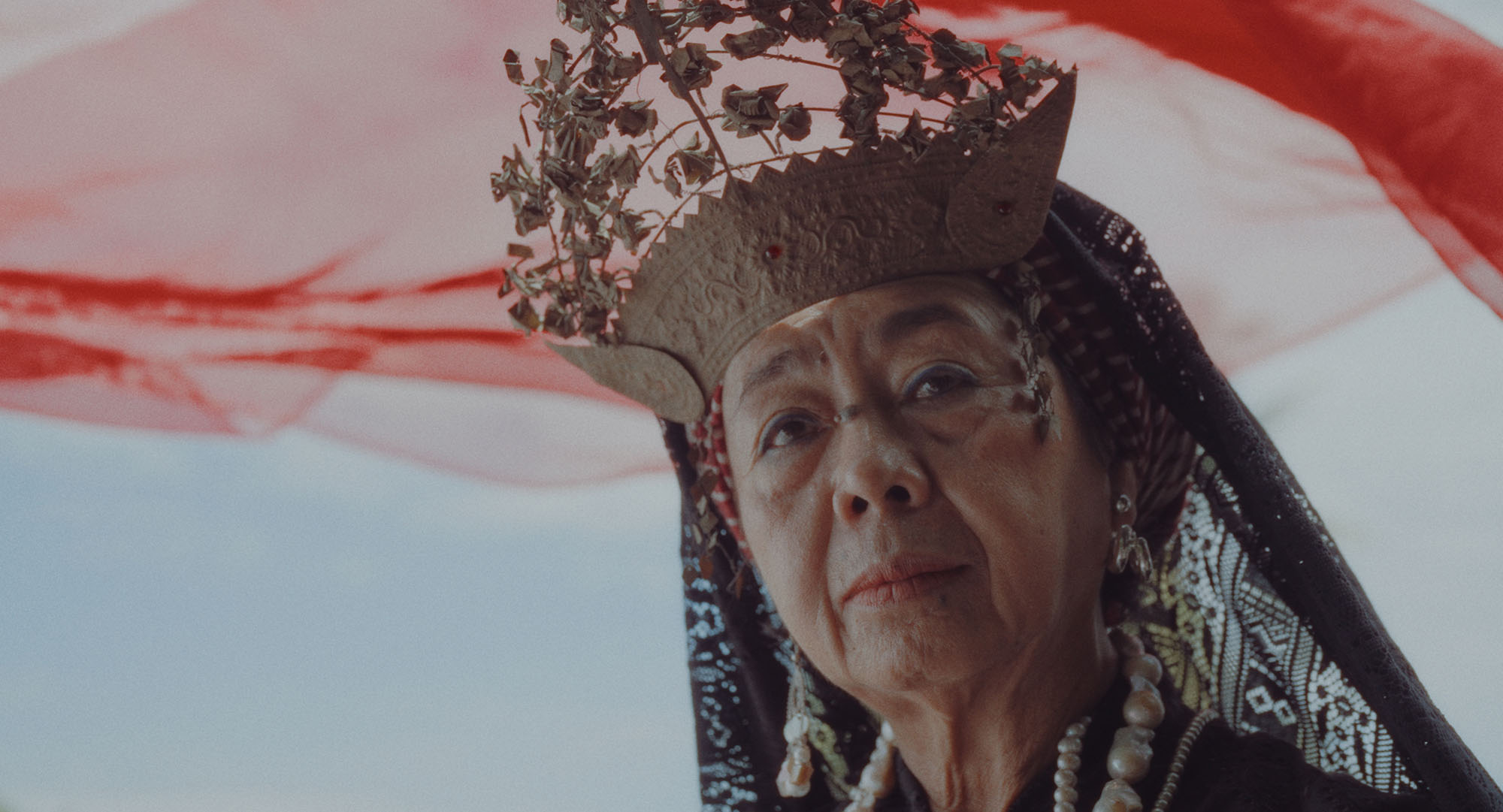
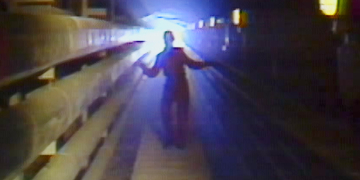
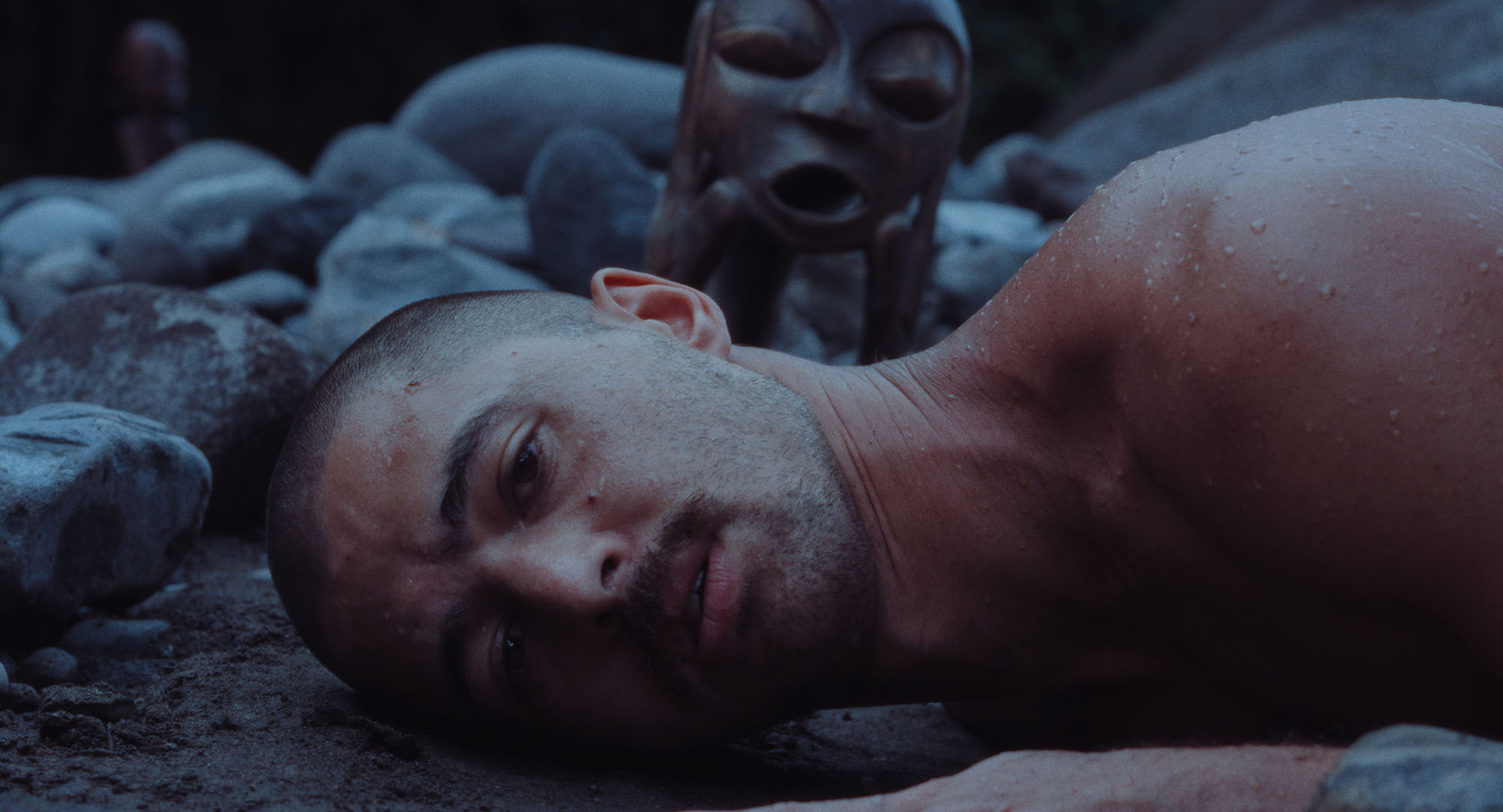
The film’s visual language also allowed Adam to explore the afterlife differently from the stage piece. In Air Pangea, Biru’s journey moves into what Adam describes as Alam Barzakh, the liminal space between death and what comes after. Rather than imagining it as a fixed place of punishment, Adam was interested in the idea that this realm might be shaped by one’s own imagination. That gave him room to approach death not only as an ending, but as a deeply personal journey, one that could be mysterious, sensual, frightening, or even playful.
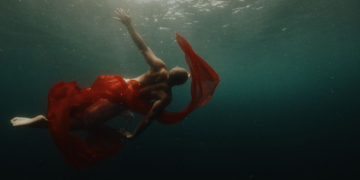
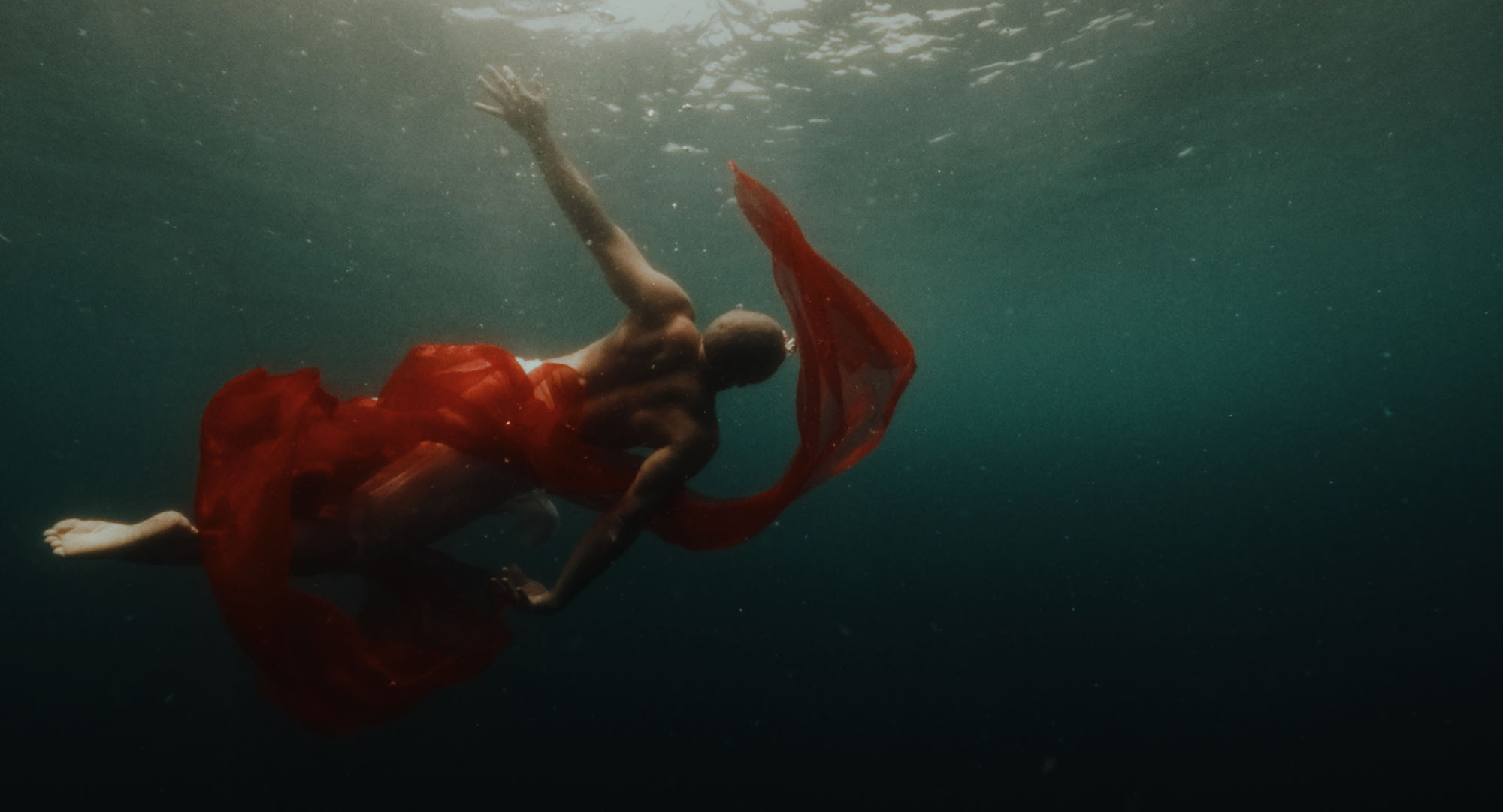
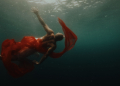
Water became one of the film’s main visual bridges between these different states of existence. It was already central to the original stage performance, where the stage was flooded, but its meaning grew from Adam’s earlier work as well. He connected water to journeys across borders and the search for a new home. In Air Pangea, water similarly becomes a passage between one state and another, carrying Biru from the physical world into the unknown.
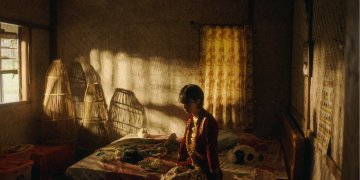
Other visual elements emerged more instinctively during the filmmaking process. The progression from Biru’s white sarong to red, and eventually to his naked body entering the water, was not originally planned as a symbolic transformation. The red was introduced during filming simply because Adam felt the images needed more colour, and its connection to the red already present in the film became clearer during editing. “It was for visual purposes,” he explains. Yet, looking back at the finished film, he also sees how the colour can suggest a connection between Biru, his mother, and the afterlife. This openness between deliberate design and meaning discovered in the process is part of what makes Air Pangea feel so fluid.
The film’s image of many eyes came from a similarly intuitive approach. Adam describes them as his interpretation of angels, whose appearance remains unknown within Islamic belief. Rather than showing a conventional human form, he chose to isolate the eyes, turning them into a symbol of observation. They watch, but they also leave room for the audience to decide what they are looking at. What might feel unsettling to one viewer could appear almost playful to another. For Adam, that ambiguity is part of the film’s design: the images do not always need to tell us exactly what to feel.
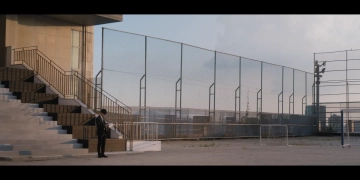
The aeroplane, meanwhile, becomes another vehicle for Biru’s journey through the film. For Adam, it represents the first flight of the soul from the body, but its meaning remains deliberately uncertain. The aeroplane appears again toward the end, echoing an earlier image and returning to Biru’s idea of death as a place that feels both familiar and distant. Is what we see a memory, a glimpse of the future, or something imagined before death? Adam leaves the answer open. As he puts it, whether Biru’s journey leads to heaven or hell is ultimately up to the audience to interpret.
That openness extends to the way Air Pangea creates its overall atmosphere. Adam says he did not set out to make the audience feel as though they were watching the film “on acid”; instead, he wanted the journey to feel exciting, unpredictable, and full of surprises. Part of that came from the way he works backwards from sound. Rather than creating the images first and adding music afterwards, Adam sometimes begins with a sound or a piece of music that catches his attention, then imagines what kind of scene, emotion, or visual world it could belong to. A particular sound can even change the direction of the story itself. For Air Pangea, he shared specific pieces of music with his collaborators alongside scenes and story ideas, using the sound to establish the tone before the images were fully formed. Music by collaborators became part of that process, helping him imagine not only what the film might look like, but how its world should feel.
The collaborative process continued into the editing. Adam made the first assembly himself, putting together what he saw as the film’s overarching story before handing it to the editor, Reza Tene. Rather than treating the edit as simply a technical stage, Adam describes it as another creative exchange: he gives his collaborators a foundation, and they bring their own interpretation to it. For Adam, this willingness to let other artists surprise him is central to filmmaking. “Give chances to people,” he says, describing his approach to collaboration as giving someone the material and allowing them to push it further. In that sense, Air Pangea became not just an adaptation of a stage work, but the result of many different artistic voices meeting and challenging one another.
For Adam, that collaborative spirit was also present in the decision to shoot the film in Lombok with a largely Lombok-based crew. The production brought together people who were working in different parts of Indonesia but returned to the island to make the film. That experience reinforced another idea behind Air Pangea: that creative work does not have to be concentrated in Jakarta or Java. Adam hopes the film can showcase the talent available in Lombok and NTB, not simply as locations for filmmakers from elsewhere to use, but as places with their own artists and crews capable of creating ambitious work.
Beyond representing Lombok, Adam also hopes Air Pangea can simply be experienced as an enjoyable film. His first priority is not necessarily that audiences arrive at one definitive interpretation, but that they allow themselves to be carried through its music, images, and surprises. He remembers showing the film to his father at a packed cinema in Lombok and receiving a response that meant a great deal to him: “That was very entertaining. I enjoyed it.” For Adam, that reaction confirmed that the film could be both visually and conceptually layered while still being, above all, fun to watch.
What makes Air Pangea more than a straightforward adaptation from stage to screen is the journey it took to become a film. What began as a collaborative exploration of home and belonging in London travelled back to Lombok, where those ideas became part of the filmmaking process itself. Through images, sound, movement, and the contributions of a collective of artists, the stage piece evolved into something that could travel beyond its original performance. In that sense, the film’s journey mirrors the one at its centre: leaving one place, entering the unknown, and eventually finding a way home.
At Minikino Film Week 12 (MFW12), Air Pangea went on to receive a Special Mention from the judges, recognising its extraordinary visuals and powerful storytelling in exploring the film’s themes. I think the recognition was well deserved. What began as a stage performance shaped by three artists searching for a sense of home has found another form on screen, one that invites audiences to reflect on belonging, identity, and the connections that shape us. After our conversation, I found myself even more curious about Adam’s creative journey. I personally can’t wait to see what he brings to the screen next.




Discussion about this post