


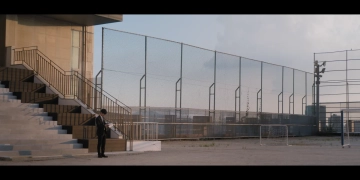
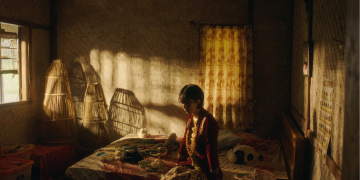



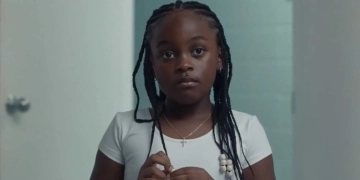
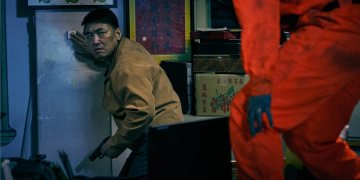



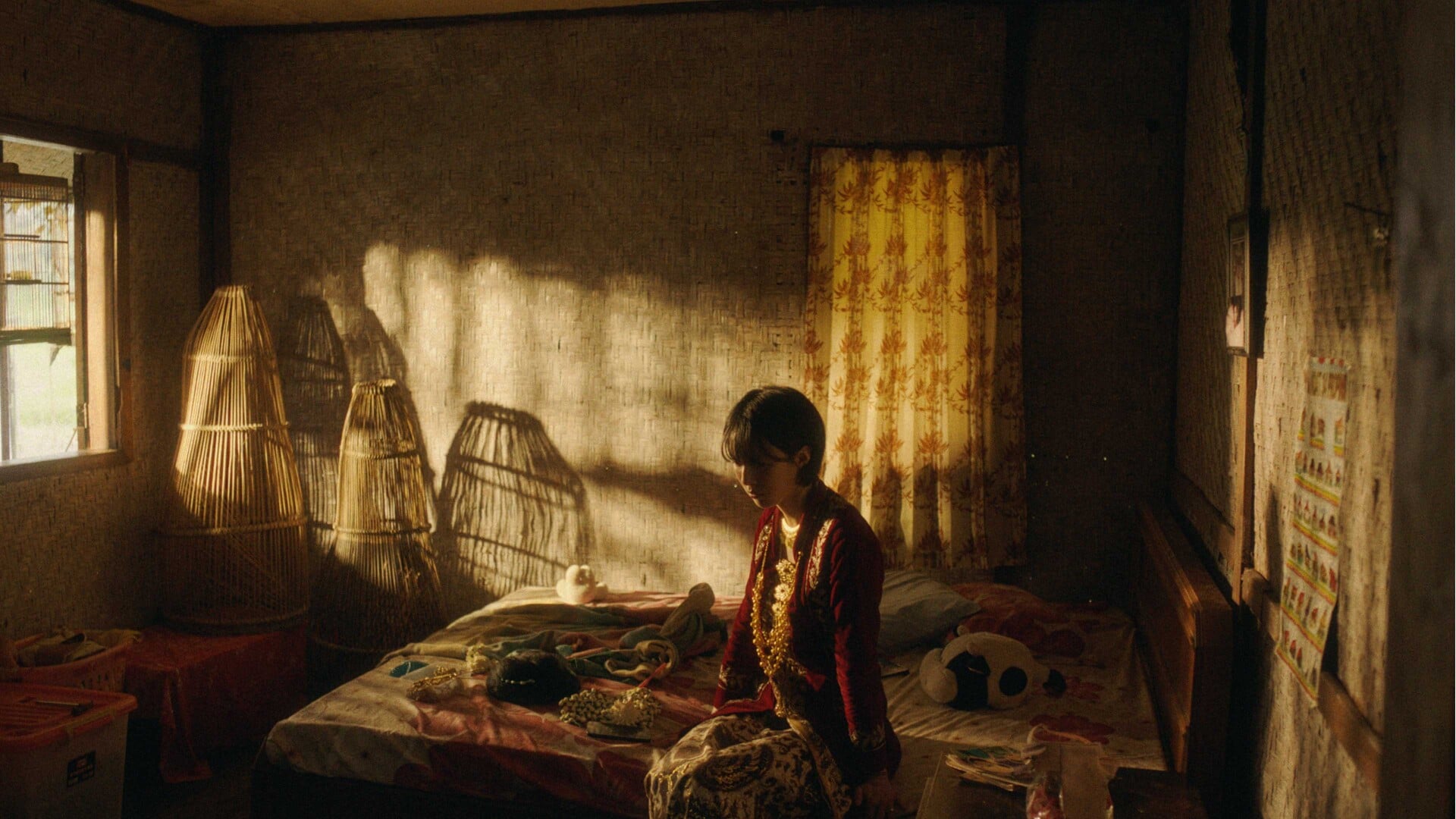
A house, a bird, and a wife. For Nizar, one of the main characters in Happily Ever After. (SINN Kirin South Korea, Indonesia, Malaysia, 2025), these are the ingredients of what a happily ever after should look like. Happily Ever After. is a tale of an intercultural relationship between Nizar, an Indonesian Javanese man and Eugene, a South Korean woman. Nizar seems to have a romantic narrative in his head: eternal love, heroine, wedding, family, happily ever after. But Eugene doesn’t appear to be inhabiting the same narrative. Happily Ever After. offers nuances, as the film asks what happens when one person’s idea of a shared future doesn’t match the other’s.
At the visit to Nizar’s family house, the audience can obviously see Eugene beginning to feel awkward and overwhelmed, even as she tries hard to be polite and answer each question. The Javanese family is warm and welcoming, expressing their hospitality in ways that may feel intimate to an outsider: offering food, asking personal questions, and involving her in conversations about her future with Nizar. What the family seems to regard as friendliness and familial involvement can also feel like a crossing of personal boundaries from Eugene’s perspective. Their warmth is genuine, but it is shaped by a different understanding of how close family members and new family members are expected to be.
However, Nizar’s mother’s suggestion that Eugene and Nizar should have many children introduces another layer to this idea of belonging. Eugene is not simply being welcomed as Nizar’s partner; she is being imagined within a traditional role as a wife and future mother. The expectation that a woman’s place within a family is fulfilled through marriage and motherhood may seem ordinary within the Indonesian cultural context, but from Eugene’s perspective, it adds another expectation to an identity she has not yet claimed for herself. This is where the film’s patriarchal undertones begin to surface: belonging is not only about entering a family, but about conforming the role that family has imagined for you.
Perhaps this is what makes Eugene and Nizar’s relationship feel familiar. Couples can continue moving forward even when they haven’t fully confronted whether they imagine the same future. Introducing a partner to the family can feel like a significant step: once family becomes involved, the relationship can acquire its own momentum, making it harder to pause and ask whether both people are actually moving in the same direction. In the film, Nizar seems comfortable allowing that momentum to carry them forward, while Eugene appears increasingly overwhelmed by where it is taking her. As Indonesian audiences, this may hit close to home, where introducing a partner to the family can carry an implicit sense that the relationship is becoming more serious.
And then there’s the bird. A bird first appears when they’re at the café, where Nizar was explaining his dream of the future with Eugene. Later, the caged bird appears while Eugene waits for Nizar to return, after he texts her, “Why don’t you play with my birds?” It reminded me of the 1970s Indonesian song Burung Dalam Sangkar, popularised by Emilia Contessa, whose opening laments, “Wahai kau burung dalam sangkar, sungguh nasibmu malang benar.” The song uses the caged bird as an image of suffering and confinement, longing for freedom from a life it did not choose. The bird in Happily Ever After. carries a similar tension: it could be a symbol of freedom, domesticity, or the happy home Nizar imagines for himself and Eugene.
The cultural difference becomes more visible through the wedding attire and the family heirloom. The traditional Javanese dress is not simply clothing for Eugene; it places her within a cultural tradition that is not her own. The same can be said of the heirloom, which carries a meaning beyond its physical form: within Nizar’s family, passing it on signifies acceptance and belonging. Yet Eugene’s reaction suggests that being welcomed into a family does not automatically mean feeling that you belong to it. What the family presents as an act of inclusion can feel, from Eugene’s perspective, like an identity being placed upon her before she is ready to claim it.
The wedding scene itself communicates a lack of agency. I believe this is a deliberate choice rather than an oversight: by withholding Eugene’s decision, the film places the audience in the same state of confusion as the character. Why does she continue to follow what is happening around her when we have already seen signs that she is uncomfortable with the future being imagined for her? The discomfort almost makes us want to question the film itself. Why is she allowing this to happen? Rather than witnessing her decision, we watch her being absorbed into a ceremony that has already taken shape around her. By the time she smiles at the end, the expression feels less like a sudden transformation than a performance of the happiness expected of her.
Director SINN Kirin skips the transition between a casual family visit for lunch and the wedding. We don’t see Eugene agree to marry Nizar or any of the steps that usually lead to a wedding. Instead, the film moves through a dreamlike sequence before Eugene wakes up and is suddenly being prepared as a bride. The audiences were given a similar experience of Eugine’s: a lack of control over the timeline.
The film concludes with a conventional romantic ending; however, it deliberately leaves out the choice that would normally lead to it. What happens when a man’s certainty about their future leaves no room for the other person to choose? In that sense, the film again exposes the patriarchal logic beneath the conventional happy ending: the future appears to have been decided before Eugene is ever shown choosing it.
The Happily Ever After. wedding scene is particularly unique. Nizar’s ecstatic expression and narration, “And they live happily ever after.,” present the wedding as the fulfilment of the future he has imagined. But Eugene’s forced smile and uneasy expression suggest a very different response. The two realities don’t quite agree, and it is witty to place them side by side. The film’s feminist undercurrent becomes most apparent here. Eugene is not simply an outsider struggling with unfamiliar customs but a woman whose future appears to have been defined by the people around her before she is given the opportunity to define it herself. Indonesian audiences might find this tension familiar. Expectations around women’s roles as wives and mothers still shape how many families imagine a woman’s future. The conventional happy ending then becomes something more unsettling: a picture of what can happen when a woman’s role in a relationship is assumed rather than chosen. A marriage built around one person’s certainty and the other’s compliance leaves little room for a woman to define herself, flourish, or even find happiness on her own terms.
Editor: Fransiska Prihadi











Discussion about this post