

Minikino
  • Home
  • SHORT FILMS
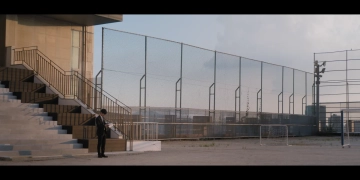
    Film Still Happily Ever After. (2025) Director SINN Kirin

    WHOSE HAPPY ENDING IS THIS?

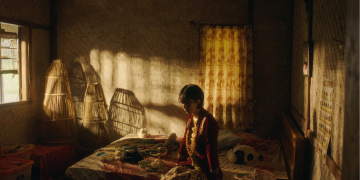
    Still Film Yes! (Jah!) (2024) Sutradara 
Madli Lääne

    Meniti Titik pada Papan: Ulasan program “Sense of Place” di Minikino Film Week ke-12

    Still Film Last May In Theaters (2025) Sutradara Arief Budiman

    Ingatan dan Trauma di Balik Bioskop : “Last May In Theaters”

    Gambar dari film Still by My Side, tampak seorang pria mengelus anjingnya.

    Beyond Taxidermy: How Still by My Side Reimagines Grief

    Gambar dari film On a Sunday at Eleven, tampak seorang anak berkulit hitam mengenakan kaos putih.

    Ketika Warna Menjadi Bermakna

    Still Film Bite (2018) Sutradara Ray Wu

    How to Survive a Zombie Outbreak

    Propaganda Sebagai Sebuah ‘Kebijaksanaan’: Apa yang Kita Percayai?

    still film A beautiful summer noon

    Ketika Tubuh Menolak Lupa

    Gambar adegan dari film NGGAK.

    Generational Dynamic: Indonesia, In Between (Remix)

  • NOTES
  • INTERVIEWS
  • INTERNATIONAL
  • OPINION
  • ABOUT
No Result
View All Result
Minikino Articles
  • Home
  • SHORT FILMS
    Film Still Happily Ever After. (2025) Director SINN Kirin

    WHOSE HAPPY ENDING IS THIS?

    Still Film Yes! (Jah!) (2024) Sutradara 
Madli Lääne

    Meniti Titik pada Papan: Ulasan program “Sense of Place” di Minikino Film Week ke-12

    Still Film Last May In Theaters (2025) Sutradara Arief Budiman

    Ingatan dan Trauma di Balik Bioskop : “Last May In Theaters”

    Gambar dari film Still by My Side, tampak seorang pria mengelus anjingnya.

    Beyond Taxidermy: How Still by My Side Reimagines Grief

    Gambar dari film On a Sunday at Eleven, tampak seorang anak berkulit hitam mengenakan kaos putih.

    Ketika Warna Menjadi Bermakna

    Still Film Bite (2018) Sutradara Ray Wu

    How to Survive a Zombie Outbreak

    Propaganda Sebagai Sebuah ‘Kebijaksanaan’: Apa yang Kita Percayai?

    still film A beautiful summer noon

    Ketika Tubuh Menolak Lupa

    Gambar adegan dari film NGGAK.

    Generational Dynamic: Indonesia, In Between (Remix)

  • NOTES
  • INTERVIEWS
  • INTERNATIONAL
  • OPINION
  • ABOUT
No Result
View All Result
Minikino
No Result
View All Result
Home INTERVIEWS

Sharp Objects: Spiky Leaves, Celluloid and The Revival of Lost Balinese Heritage

Hélène Ouvrard by Hélène Ouvrard
September 23, 2026
in INTERVIEWS
Reading Time: 4 mins read
Film Still of Sharp Objects (2025) Director Taufiqurrahman Kifu & Hattie Wade

Film Still of Sharp Objects (2025) Director Taufiqurrahman Kifu & Hattie Wade

Uncovering the missing history of a Balinese ceremonial dagger stolen over a century ago is an arduous task that would send archeologists on decades of field research. Bringing that story to the screen together with someone from another culture than yours living thousands of kilometers away seems like an impossible feat. And yet that’s exactly what Hattie Wade and Taufiqurrahman Kifu pulled off with their documentary Sharp Objects.

Both were scouted by the Bandung-based art collective Indeks and wysiwyg, a screening platform from The Hague, for their transnational film collaboration Beyond Provenance. The project is a response to the announcement in 2023 by the Dutch government of the restitution to Indonesia of invaluable cultural  artefacts stolen during the colonial era. Among these features the Keris Klungkung, a Balinese royal ceremonial dagger that bore witness to the fierce resistance of the King of Klungkung and his people to the Dutch colonizers, especially its gruesome end, as all the Balinese followed their king into death, taking their own lives in a mass ritual suicide known as puputan, rather than surrender. Following the kingdom’s demise, the keris was looted and found its way to the Netherlands, unceremoniously archived among thousands of other objects. Meanwhile in Bali, the Dutch attempted to rehabilitate their severely damaged international reputation by transforming the island into a touristic paradise.

Sharp objects retraces Hattie and Kifu’s quest to uncover the forgotten history of the keris and in the process delivers an indeed sharp critique of the far-reaching consequences of Dutch colonialism on Bali’s loss of its own heritage and constructed touristic development. The topic of restitution is all the more important to address in this context that it is still ingrained in the Indonesian psyche that their former colonizer would be better suited to care for their own
heritage than Indonesia itself. This particularly interested Hattie, whose previous work has been questioning how nationalist stories and myths are constructed around cultural artefacts or landmarks, using them as a tool to perpetuate existing dominant social and institutional narratives.

Both approached their subject with respectful humility. Hailing from Sulawesi, Kifu was concerned about how Balinese people would react to him making a film about such a significant part of their history and heritage, but marveled at how open and willing to share about their knowledge they were. Hattie knew that she had a lot to catch on and put herself in the position of a student. “Being aware of my presence on a topic I am removed from also means understanding my connection to it, coming from a colonizing country. I had to make sure I understood that history.”

From the onset, something became clear: the keris’ story remained a total mystery, erased from memory. Instead of a dead end, this realization further determined the filmmakers to give the keris its rightful place back in Balinese history, while connecting past and present. The filmmaking process was a tour de force in itself, as both filmmakers worked together yet totally remotely, literally stitching a four-hand documentary into existence, one still at a time. While
Hattie researched extensively in the Netherlands, Kifu followed the lost trail of the keris in Bali. Sadly, even the current King of Klungkung’s own household could not give him more information about the precious heirloom that had disappeared such a long time ago. From there, the filmmakers entered the realm of speculation. “It made it interesting though, because it gave us that space to listen to every perspective about the keris”, muses Kifu.

Everything turned around thanks to a leaf. Kifu met a Balinese keris master, who shared his deep knowledge of the philosophy imbued in that sacred dagger and revealed that the very shape of the keris was inspired by a spiky local plant called jeruju. As it is now hard to find in its natural environment in Bali because of rampant touristic development, Hattie set out to search for it, but could only find dried, lifeless specimens in sterile archives in Leiden. The plant thus became the perfect metaphor for the film, embodying the disappearance of Bali’s wealth of local wisdom and traditional culture, buried under the island’s colonial past and man-made touristic paradise.

The power of the film lies in its experimental approach, physically embedding the missing link connecting past and present into the film. Kifu shot tourists at the beach on celluloid, the same medium the Dutch used to record their presence in Indonesia. Flipping the narrative, he literally scraped away the developed film and added visuals of the jeruju underneath, literally peeling off the veneer of tourism born from colonialism to reveal the lost, yet alive, Balinese heritage within. The film culminates with the equally experimental and ingenious recreation of the puputan. Highlighting the irony of history, Kifu filmed at the site where the massacre took place, where the Bali Hotel – the first international hotel built by the Dutch on the island – now stands. Shooting people playing in the hotel pool or jumping around, Kifu then created a collage of chopped frames, using the celluloid’s negative to turn blue water into red blood and transform tourists having fun into agonizing victims. Hectic and eerie, the scene is as hypnotizing as it is dread-inducing.

In the end the film is a puzzle in every sense of the word, perfectly embodying the complexity of its subject. Past and present, celluloid and digital, all intertwine. Cold records of history in a foreign land contrast with a rich living heritage. The keris, and with it, the wealth of Balinese history and local wisdom finally resurfaces under the veneer of modernity.

This film was a nominee for the Minikino Film Week 12 National Competition 2026
Tags: 2026heritage
ShareTweetShareSend
Previous Post

WHOSE HAPPY ENDING IS THIS?

Hélène Ouvrard

Hélène Ouvrard

Based in Southeast Asia, Helene has been involved in the development and cultural sector for 15 years. She has worked as coordinator for various cultural projects in the region, including film festival organization. She has worked as editor, translator and contributed texts for a publication on contemporary arts in Laos and articles for Minikino Film Week.

Related Posts

Still Film Last May In Theaters (2025) Sutradara Arief Budiman

Ingatan dan Trauma di Balik Bioskop : “Last May In Theaters”

August 31, 2026
Gambar dari film Sumpah Pemuda foto perempuan tersenyum mengenakan baju hitam

Sumpah Ini Untuk Siapa?

August 21, 2026
Foto bersama Tyas sebagai penulis dan Mickey sebagai Sutradara film pendek WAShhh

Mencuci Pembalut, Mencuci Ketakutan: Rasisme dan Solidaritas dalam WASHhh

June 1, 2026
Still Film 12 Moments Before Flag-Raising Ceremony (2025) arahan Zhizheng Qu

Berbagi Sentimen Tentang Jurang Generasi Bersama Owen Effendi dalam Kaitannya dengan 12 Moments Before Flag-Raising Ceremony (2025)

November 5, 2025
Still Film My Paws are Soft, My Bones are Heavy (2024) arahan Garry Christian

Melankolia Masa Muda dalam Percakapan Bersama Garry Christian dan Feisha Permanayadi

October 31, 2025

Estetika Politik dan Kuasa Advokasi Film Pendek: Membahas Trilogi Awyu bersama Wulan Putri dan Harryaldi Kurniawan

October 24, 2025

Discussion about this post

Archives

Kirim Tulisan

Siapapun boleh ikutan meramaikan halaman artikel di minikino.org.

Silahkan kirim artikel anda ke redaksi@minikino.org. Isinya bebas, mau berbagi, curhat, kritik, saran, asalkan masih dalam lingkup kegiatan-kegiatan yang dilakukan Minikino, film pendek dan budaya sinema, baik khusus atau secara umum. Agar halaman ini bisa menjadi catatan bersama untuk kerja yang lebih baik lagi ke depan.

ArticlesTerbaru

Film Still of Sharp Objects (2025) Director Taufiqurrahman Kifu & Hattie Wade

Sharp Objects: Spiky Leaves, Celluloid and The Revival of Lost Balinese Heritage

September 23, 2026
Film Still Happily Ever After. (2025) Director SINN Kirin

WHOSE HAPPY ENDING IS THIS?

September 8, 2026
Still Film Yes! (Jah!) (2024) Sutradara 
Madli Lääne

Meniti Titik pada Papan: Ulasan program “Sense of Place” di Minikino Film Week ke-12

September 3, 2026
Still Film Last May In Theaters (2025) Sutradara Arief Budiman

Ingatan dan Trauma di Balik Bioskop : “Last May In Theaters”

August 31, 2026
Gambar dari film Sumpah Pemuda foto perempuan tersenyum mengenakan baju hitam

Sumpah Ini Untuk Siapa?

August 21, 2026

ABOUT MINIKINO

Minikino is an Indonesia’s short film festival organization with an international networking. We work throughout the year, arranging and organizing various forms of short film festivals and its supporting activities with their own sub-focus.

Recent Posts

  • Sharp Objects: Spiky Leaves, Celluloid and The Revival of Lost Balinese Heritage
  • WHOSE HAPPY ENDING IS THIS?
  • Meniti Titik pada Papan: Ulasan program “Sense of Place” di Minikino Film Week ke-12
  • Ingatan dan Trauma di Balik Bioskop : “Last May In Theaters”
  • Sumpah Ini Untuk Siapa?

CATEGORIES

  • ARTICLES
  • INTERVIEWS
  • NOTES
  • OPINION
  • PODCAST
  • SHORT FILMS
  • VIDEO

Minikino Film Week 11 Festival Recap

  • MINIKINO.ORG
  • FILM WEEK
  • INDONESIA RAJA
  • BEGADANG

© 2021 Minikino | Yayasan Kino Media

Welcome Back!

Login to your account below

Forgotten Password?

Retrieve your password

Please enter your username or email address to reset your password.

Log In

Add New Playlist

No Result
View All Result
  • Home
  • SHORT FILMS
  • NOTES
  • INTERVIEWS
  • INTERNATIONAL
  • OPINION
  • ABOUT

© 2021 Minikino | Yayasan Kino Media