

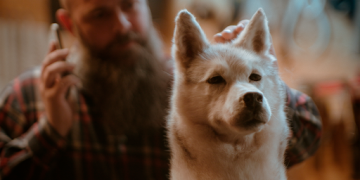



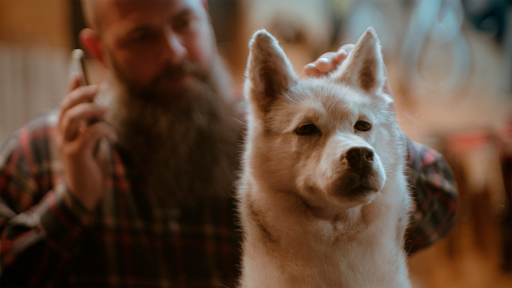
At its core, Still by My Side (The Netherlands, 2025) is a documentary directed by Jasper van Leeningen reflects on the lengths people go to in searching for a way to carry their companion’s presence into their everyday lives. The documentary shows its characters not as individuals who are unable to accept death, but as owners trying to preserve the memories. Their pets are shown not merely as animals, but as family members who offered comfort, companionship, and support. Within that context, taxidermy becomes less an act of preserving a body than of preserving a relationship that continues to hold meaning long after death.
In a society where the grief of losing a pet is often misunderstood, if not dismissed, compared to losing a human loved one, Still by My Side offers a gentle reminder that loss cannot be measured by species. By approaching pet taxidermy with empathy rather than sensationalism, the documentary broadens the conversation beyond the practice itself and asks audiences to consider the deeply personal ways people choose to honour those they love.
To some of us, the bond we have with our pets is undeniably strong, with some even stronger than our attachment to other human beings. As pet parents, some of us even experience what is called ‘Anticipatory Grief’ long before our pets pass away. It is the fact of knowing that our time with them is finite, and there is nothing we can do about it. Yes, it is true that some of us treat our pets as more than “just a pet,” greatly because they have rescued us, or simply because they are our loyal companions with unconditional love. We consider them our family members.
For me, the thought of losing my dog is difficult to separate from the thought of losing a family member. Especially now he is 10 years old and considered a senior dog. I know that feeling of anticipating the loss of a pet because we know their lives are shorter than ours. Perhaps that is why the idea of preserving a pet’s physical form after death doesn’t feel entirely incomprehensible for me, even if taxidermy itself does.
Still by My SIde follows pet owners in the Netherlands who choose taxidermy as a way of preserving their deceased companions. Rather than focusing on the practice itself, the documentary presents it as a gateway to explore grief, memory, and the enduring bond between humans and their pets. It explores how grief can become tangible through taxidermy, challenging our assumptions about what it means to remember those we love.
Losing a pet can leave an absence that is difficult to explain to people who have never experienced that kind of bond. We may call them companions, but for many of us they are woven into the most intimate parts of our lives: they comfort us through difficult periods, share our routines, and become witnesses to versions of ourselves that others don’t see, they become family. Still by My Side asks us to consider what happens when that bond survives the death of the pets. Through its portrayal of owners who choose taxidermy, the documentary suggests that preserving a pet’s body can be less about denying death than about finding a tangible way to live with the relationship that remains. The taxidermist’s careful work reinforces this idea, shifting our attention from the strangeness of the practice to the care and meaning invested in it.
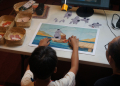
At first glance, the process of taxidermy may seem unsettling or even gruesome. Yet, Jasper approaches it with remarkable delicacy. By lingering on the careful stages of outlining, sculpting, and restoring each animal, the documentary transforms what many might perceive as macabre into an act of craftsmanship. Its attention to meticulous details shifts the focus away from death and toward the care invested in preserving a beloved companion. These scenes encourage me as an audience member to see the process through the eyes of those who regard it as an expression of love and remembrance. What initially seemed to be a story about taxidermy gradually unfolds into something far more intimate.
In the Netherlands, taxidermy has an established history as natural history, collecting, craftsmanship, and display of hunting trophies. In Indonesia, it is also present, but much more visibly associated with museums, educational collections, and wildlife displays. Neither context automatically tells us how ordinary people perceive the preservation of a beloved pet. Specifically in Indonesia where pet taxidermy is an unfamiliar and uncommon practice.
However, the documentary invites empathy instead of judgement for owners who choose the route of pet taxidermy after their pets pass away, showing how happy they are with the results and how it gives new meaning to their lives. However, it also begs the question: is there a right way to grieve? Perhaps the documentary’s greatest achievement is not changing our minds about taxidermy, but encouraging us to reconsider whether there is a single “right” way to love, remember, and mourn those who have shaped our lives.
Editor: Fransiska Prihadi






Discussion about this post