

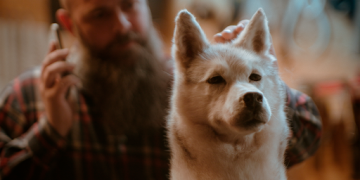
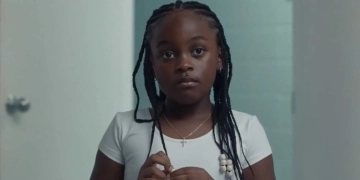
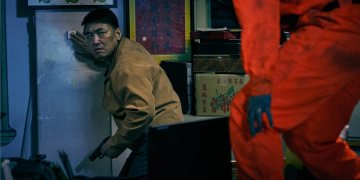
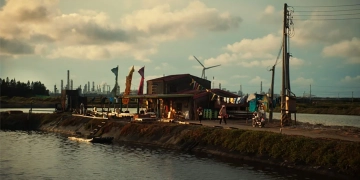
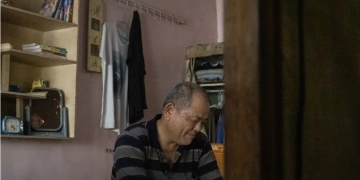


When we think of films, the first things that come to mind are usually commercial blockbusters in theaters. Rarely do people think of short films, a format that often serves as the starting point for a career and a laboratory for new ideas. Fortunately, various film festivals provide a space for them, and Minikino is one that is completely dedicated to short-film works.
Behind the festival screens, the atmosphere is even more intimate: conversations at food stalls, laughter that masks nervousness, and sometimes blunt but constructive criticism. It’s a place where many young filmmakers find the courage to declare themselves ‘filmmakers.’
To keep that courage growing, Minikino designed a series of ongoing programs. The Short Film Market, which has been part of Minikino Film Week (MFW) since 2019, creates a space for filmmakers to connect with the industry. Meanwhile, Shorts Up, which started in 2024, offers an intensive mentorship process for scriptwriting and development. Through these two programs, MFW provides a more structured and continuous learning environment for young filmmakers.
Within the MFW Short Film Market, various activities are designed as a laboratory: a place where ideas, scripts, and even completed works are treated as learning materials for better future projects. One is Roast Your Shorts, an event where scripts are brought before “roasters”—professionals from various film-related backgrounds—and blunt criticism is considered a gift. There’s also Toast Your Shorts, a warmer space to receive feedback from international festival programmers and open up distribution opportunities.
Minikino’s commitment doesn’t end when the festival is over. In July 2025, Dyana Wulandari, Manager of the 7th Short Film Market at MFW11, along with Program Director Fransiska Prihadi, reconnected with alumni from the 2024 Shorts Up program and a number of Toast Your Shorts and Roast Your Shorts alumni from 2019–2024. The goal was simple yet important: to maintain relationships, monitor progress, and provide support so that alumni projects don’t stall. This step emphasizes that the program’s impact doesn’t end after the festival; it continues throughout each filmmaker’s journey.
Narratives from the Alumni
The journeys of the 2024 Shorts Up alumni show diverse paths. Rahmi Salsabila and A. Nurul Ghaliyah Gunawan from Aidea Film (South Sulawesi) used their Audience Award Pitching prize from Shorts Up 2024 at MFW10 to create a teaser. “The plot remains the same, but the characters need to be strengthened, so the research has to be deeper. It’s a journey that makes the script evolve, though honestly, sometimes too much research makes us stop writing,” says Ai with a laugh. Meanwhile, Sulhi Azhari and Tutik Rahmawati of Chendool Imaginations (West Nusa Tenggara) took their project, Kabar yang Kabur (Hazy News), to international forums. “We know the competition is very tight. But the experience of sending the proposal itself made us better understand how to bring this story to a global stage,” Sulhi explained.
Another story comes from Acah Acah Films (Central Java) with their project, Pantai Impian (Dream Beach). Rizqullah Ramadhan Panggabean admitted, “I felt like this story was just floating around. I finally realized the project couldn’t move forward if I didn’t go home. I had to go back to Tanjung Pinang, meet people, and listen to their stories. Only then did the film feel alive again.” On a different path, Merakit Pictures (DI Yogyakarta), produced by Saddam Putra Dewa Rimbawan with writer/director Cinta Setia Aisyah, recently completed production. “If it weren’t for Minikino, I don’t think we would have entered the shooting phase this quickly. There would have been so many considerations. But now we feel more prepared. Even with the smallest things, like how to send an email to a sponsor,” said Saddam.
Podium Pictures (DKI Jakarta) also faced challenges with Michael Rainheart and Amar Haikal’s project, Seremoni (Bathe in Glory). Shooting was delayed and finding investors was challenging. “There were moments of stress, and we even stopped talking to each other for a while. But in the end, we realized we were fighting for the project itself. The last meeting with an investor even made us more optimistic. This is truly a learning process, not just about film but also about building a company,” said Michael. Filming was finally completed at the end of July 2025. From Shock Film (Palembang), M. Ilham Prajatama is still refining his script while working as an assistant director in Jakarta. “My short film project is still in flux; I’ve refined it multiple times. But I’m trying to apply what I learned from Shorts Up, especially budgeting and how to build collaborations, to other projects too,” Ilham revealed. His producer, Bryan Hadi Kesuma, continues to be supportive while waiting for the final script.
In the personal documentary genre, Hafidz Nur Rahmadi from Meracik Sihir (DKI Jakarta) described his process as slow but intense. “I keep recording my daily life, especially conversations with my grandmother. It feels very slow, like a snail, but that’s where I find new depth,” he said. His producers, Galih Rama and Gatot Jalu, believe the project’s strength lies in this long process. Meanwhile, Beny Kristia from Berakinema (East Java) felt the impact of Shorts Up even during an internship. “During a job interview, I was asked about Shorts Up, and it turned out to be a huge plus. From that, I realized that the experience at Shorts Up wasn’t just about the project, but it also made me better understand how the industry works,” he explained.
Each alumnus is on a different path: some are postponing production for research, others are changing direction, some have finished shooting and are in post-production, and still others are searching for the right form. However, the common thread is the same: the space for growth they found at Shorts Up and the MFW Short Film Market did not end at the festival; it continues to live on in how they work, communicate, and realize their dreams as filmmakers.

When Criticism Becomes an Asset, and Feedback Becomes a Path
In the Roast Your Shorts session, many alumni returned home with mixed feelings: nervous, relieved, and a bit humbled. I Made Suniartika (Suni) clearly remember bringing a script for his final college assignment. “My ambition was huge then; I wanted to cram everything into one short film. My ego was so high. But the roasters at the time—Mary Grace Liew (Malaysia), Muhammad Heri Fadli and Gita Fara (Indonesia), and Masoud Soheili (Iran)—reminded me: focus. In your fifteen-minute short film, choose one clear topic,” he recalled.
A similar experience was had by producer Sukhadharmi Padmalauwaty and writer/director William from Bloom Pictures in 2024. For the first time, they faced international roasters with diverse perspectives. “It was exciting to get feedback from different countries, even though language barriers sometimes made us miscommunicate or not connect at all,” said Sukha. Khozy Rizal gave them some memorable advice: first, think about who the film’s audience is. Don’t write to make it cheap; write as freely as you can first, then adjust to the budget. William added, “Many said our story had potential, but there was too much dialogue ,and the visuals weren’t clear enough. From that, we learned that short films on the festival circuit require a story that is also visually compelling.”
If Roast Your Shorts is a high-pressure environment, then Toast Your Shorts provides a warm perspective. Olivia Griselda, an Indonesian filmmaker based in Singapore, brought her animation She and Her Good Vibration to MFW7 in 2021 and received a distribution strategy that paved the way for her film to be screened at nearly 200 international festivals. “The most valuable thing was the feedback from the festival programmers. They not only give criticism, but also a map: which festivals are suitable for this film, and what kind of curatorial style we should pay attention to,” she explained.
Giovanni Rustanto, a Toast Your Shorts alumnus at MFW8 in 2022, called the session a rare opportunity. “When else can you talk directly with international festival programmers? After this opportunity, I received funding from Layar Indonesiana, shot the film, and it finally started being screened at various festivals. I feel more confident because there’s validation from people who are used to watching hundreds of short films every year,” he said.
Roast Your Shorts provides criticism; Toast Your Shorts shows the way. Both ignite a new passion, sending filmmakers home with more than just notes on paper—they leave with the courage to continue their journey with their stories.

Friendship as a Foundation for Collaboration
Besides criticism and distribution strategies, there is one thing that alumni often mention: friendship. Shorts Up 2025 featured Vivian Idris speaking about international co-production. In that session, Vivian emphasized that cross-country co-production is not just about funding, but also about building relationships. “Friendship is a comfort zone. From there, collaboration is born more easily,” she said. This is the spirit that continues to grow within the Minikino community—collaborations that often extend into subsequent projects.
The impact, though not always immediate, is tangible. Scripts that were once a mess find focus. Projects that stalled get a new lease on life. Some have succeeded in breaking into international festivals, while others are still in the process of finding their form. One thing is clear: young Indonesian filmmakers now know they are not alone.
A short film may have a brief duration, but it has a long journey. And through talent development programs, Minikino continues to remind us that criticism, collaboration, and the courage to listen are all part of growth.
For anyone reading this, there are many ways to get involved: come to the 7th Short Film Market at Minikino Film Week 11 (September 12–19, 2025), participate as an attendee or observer, or watch the short films at the festival. From these warm spaces, the important stories of the future are being prepared, and perhaps, you too will be a part of that journey.
Writers Team: Fransiska Prihadi and Dyana Wulandari
Want to know more about Shorts Up 2025? Contact shortsup@minikino.org
WRITERS PROFILE
 |
Fransiska Prihadi
FRANSISKA PRIHADI is an architect, co-founder of art-house cinema MASH Denpasar in Bali. She is Program Director of Minikino. She served as guest programmer & jury for various national and international short film festivals, with experience as facilitator and mentor for filmmaking and film festival writing workshops. |
 |
Dyana Wulandari
Dyana is the Short Film Market Coordinator at Minikino Film Week (MFW), Bali International Short Film Festival. A graduate in Event Management, she has a strong passion for connecting people through events. She has experience as the Project Coordinator for the Vertical Filmmaking Competition 2024, a collaboration between Minikino, Internews, and FilmAid. Dyana also plays a key role as a committee member for the Minikino Shorts Up Film Lab 2024 and 2025. |








Discussion about this post